
What to Do If You Didn't Get the CHSE Result You Expected
Not getting the CHSE result you hoped for can feel disappointing, but it doesn't define your future. Whether you're considering an improvement exam, choosing a different college, or exploring career alternatives, this guide explains the practical steps every Odisha student should know to make informed decisions after Class 12.
Dr. RK Singh
Founder, The CoacHR
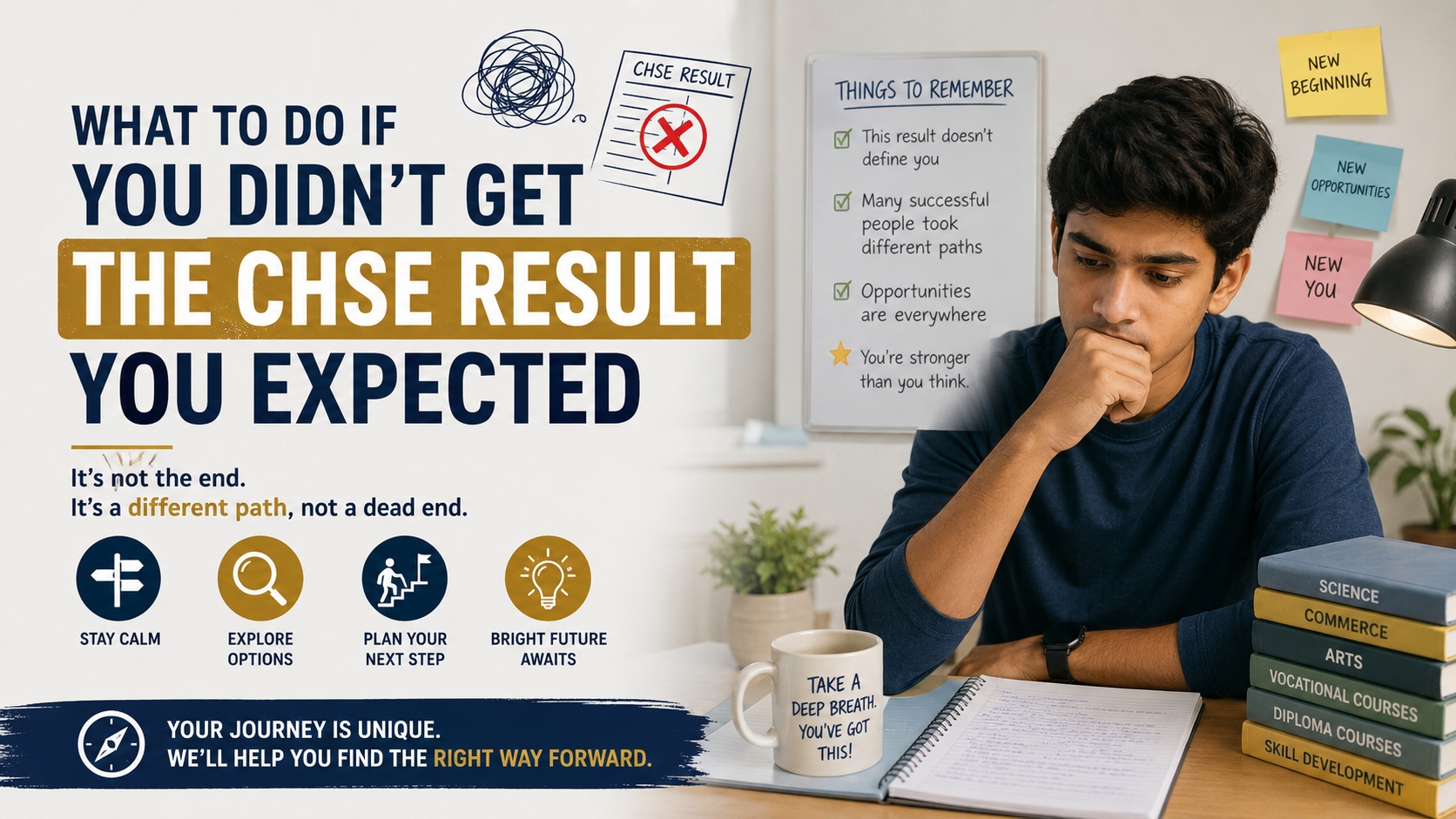
What to Do If You Didn't Get the CHSE Result You Expected
Receiving your CHSE Odisha result is one of the biggest milestones after Class 12. Many students wait eagerly for the marks, hoping they will be enough to secure admission into their dream college or preferred course. But what happens when the result isn't what you expected?
If you're searching for "CHSE result not as expected what to do," you're not alone. Every year, thousands of students in Odisha score lower than they anticipated. While it's natural to feel disappointed, your Class 12 marks are only one part of your academic journey. They do not determine your intelligence, potential, or long-term career success.
The important thing now is to understand your options, avoid making decisions based on panic, and choose the next step that aligns with your goals.
In this guide, we'll explore practical solutions, career alternatives, and strategies that can help you move forward with confidence.
Why Low CHSE Marks Aren't the End
One examination cannot measure your complete ability.
Many successful professionals, entrepreneurs, designers, software developers, and government officers didn't score exceptionally high in Class 12. What helped them succeed was consistent learning, skill development, and making informed career decisions.
A lower percentage may affect admission into a few highly competitive colleges, but it does not eliminate your opportunities.
Remember:
Thousands of colleges accept students with varying percentages.
Entrance exams often matter more than board marks.
Skill-based careers are growing rapidly.
Employers increasingly value practical knowledge over academic scores.
Instead of asking, "Why did this happen?" ask yourself, "What can I do next?"
That question will move you forward.
Take Time to Understand Your Result
Before making any major decision, carefully review your marks.
Ask yourself:
Which subjects brought your score down?
Were your internal marks satisfactory?
Did you struggle with time management?
Did exam stress affect your performance?
Were you expecting significantly higher marks?
Understanding the reason behind your result helps determine the best course of action.
Sometimes the issue isn't capability—it could simply be exam strategy or preparation methods.
Should You Apply for Rechecking or Revaluation?
If you genuinely believe your marks don't reflect your performance, you may consider applying for:
Rechecking
Revaluation (if applicable)
Photocopy of answer scripts
This option is suitable if:
You consistently scored much higher in school.
You expected substantially better marks.
You suspect an evaluation error.
However, don't depend entirely on revaluation.
Continue planning your admission process while waiting for the results.
CHSE Improvement Exam Odisha: Is It Worth It?
One of the most searched questions is:
"Should I take the CHSE improvement exam?"
The answer depends on your career goals.
You should consider an improvement exam if:
You want admission into a college with higher cutoff marks.
You plan to appear for competitive exams where board marks carry weight.
You believe you can significantly improve your score.
It may not be necessary if:
You've already secured admission into a suitable course.
Your chosen career focuses more on entrance exams or practical skills.
Delaying one academic year doesn't fit your plans.
Before deciding, compare the potential benefits against the time investment.
College Admission Options After Low Marks
Many students believe lower marks mean they won't get admission anywhere.
That isn't true.
There are numerous options available in Odisha, including:
Private Colleges
Many reputed private colleges accept students with moderate percentages while offering quality education and placement support.
Focus on:
Faculty quality
Infrastructure
Placement records
Industry partnerships
Internship opportunities
Rather than only looking at college rankings.
Autonomous Colleges
Autonomous institutions often provide flexible curricula, skill-based education, and updated industry-oriented programs.
These can be excellent choices depending on your career goals.
Distance and Online Education
If financial constraints or location are concerns, online and distance education can be valuable alternatives when combined with professional certifications.
Career Options After Low Percentage
Your percentage doesn't define your career.
Instead, choose based on your interests and strengths.
Here are several fields with excellent opportunities.
Computer Applications
Courses include:
BCA
Web Development
Software Testing
Data Analytics
Cybersecurity
Technology companies increasingly hire based on skills rather than board percentages.
Digital Marketing
A fast-growing field covering:
SEO
Social Media Marketing
Google Ads
Content Writing
Email Marketing
Analytics
Many professionals build successful careers without exceptionally high academic scores.
Commerce and Finance
Students interested in business can pursue:
Accounting
Banking
Taxation
Financial Analysis
Professional certifications further improve career prospects.
Hospitality and Tourism
Odisha's growing tourism sector creates opportunities in:
Hotel Management
Event Management
Travel Services
Airline Hospitality
Design and Creative Careers
Creative students can explore:
Graphic Design
UI/UX Design
Animation
Video Editing
Interior Design
Fashion Design
Strong portfolios often matter more than board marks.
Diploma Courses That Offer Excellent Careers
If you're unsure about pursuing a traditional degree immediately, diploma programs can provide practical skills and quicker entry into the workforce.
Popular options include:
Polytechnic Engineering
Medical Laboratory Technology
Radiology
Hotel Management
Computer Hardware
Electronics
Civil Drafting
Electrical Technology
Many diploma holders later continue with higher education through lateral entry programs.
Focus on Skills Alongside Your Degree
Today's employers look beyond marks.
They value candidates who can solve problems, communicate effectively, and adapt to new technologies.
Consider developing skills such as:
Spoken English
Communication
Microsoft Excel
PowerPoint
Artificial Intelligence basics
Programming
Public Speaking
Time Management
Leadership
Teamwork
Learning one valuable skill every semester can significantly improve your employability.
Entrance Exams You Can Still Prepare For
Even with average CHSE marks, several entrance examinations remain open.
Depending on your chosen stream, you can prepare for:
CUET
OJEE
State-level entrance exams
Banking examinations (after graduation)
SSC examinations
Defence recruitment
Railway recruitment
Government competitive examinations
Many of these prioritize entrance performance over board percentages.
Common Mistakes Students Should Avoid
Comparing Yourself with Others
Everyone has different strengths, learning styles, and career paths.
Comparison often creates unnecessary stress.
Choosing a Course Only Because Friends Are Joining
Your career decisions should reflect your interests, not someone else's.
Ignoring Skill Development
A degree alone is no longer enough.
Practical skills make graduates more competitive.
Taking Advice from Too Many People
While guidance is helpful, conflicting opinions can create confusion.
Consult trusted teachers, career counselors, and family members before making important decisions.
How Parents Can Support Students
Parents also play an important role after the CHSE results.
Students benefit most when parents:
Listen without judgment.
Focus on solutions instead of blame.
Explore different career paths together.
Encourage professional career counseling if needed.
Celebrate effort alongside achievement.
Supportive conversations often make a significant difference in a student's confidence.
Create a Career Action Plan
Instead of worrying about the result, create a simple roadmap.
Week 1
Review marks carefully.
Decide whether rechecking is necessary.
Research colleges.
Week 2
Compare courses.
Prepare admission documents.
Speak with career counselors.
Month 1
Apply to multiple colleges.
Begin learning an in-demand skill.
Update your academic goals.
Taking consistent action helps replace uncertainty with progress.
Frequently Asked Questions
Can I get admission with low CHSE marks?
Yes. Many colleges accept students with moderate percentages. Focus on finding a course that matches your interests and career aspirations rather than only aiming for the highest-ranked institution.
Should I take the CHSE improvement exam?
If improving your score will significantly increase your chances of entering your preferred college or course, it can be a worthwhile option. Otherwise, consider moving forward with higher education while building practical skills.
Do Class 12 marks matter for jobs?
Some employers consider academic records, but many prioritize graduation performance, technical expertise, internships, communication skills, and work experience.
Can I build a successful career after scoring below 60%?
Absolutely. Career success depends on continuous learning, practical experience, networking, and skill development—not just board exam marks.
Is career counseling helpful after CHSE results?
Yes. A qualified career counselor can help you identify suitable courses, colleges, and career paths based on your interests, strengths, and long-term goals.
Final Thoughts
Receiving a lower-than-expected CHSE result can be disappointing, but it doesn't define your future. Many successful careers are built through informed choices, persistence, and continuous learning rather than perfect academic scores.
Instead of focusing only on the percentage you've received, focus on the opportunities still available. Explore suitable colleges, evaluate different career paths, consider improvement exams if they align with your goals, and invest in skills that employers value.
Remember, your journey doesn't end with one examination. It begins with the decisions you make afterward.
The most successful students aren't always the ones who score the highest—they're often the ones who adapt, keep learning, and continue moving forward with confidence.
Related Articles

Will AI Take Your Job? How Bhubaneswar Professionals Can Future-Proof Their Careers
It's not AI that ends careers — it's staying static while everyone else adapts. Here's how to know exactly where you stand.
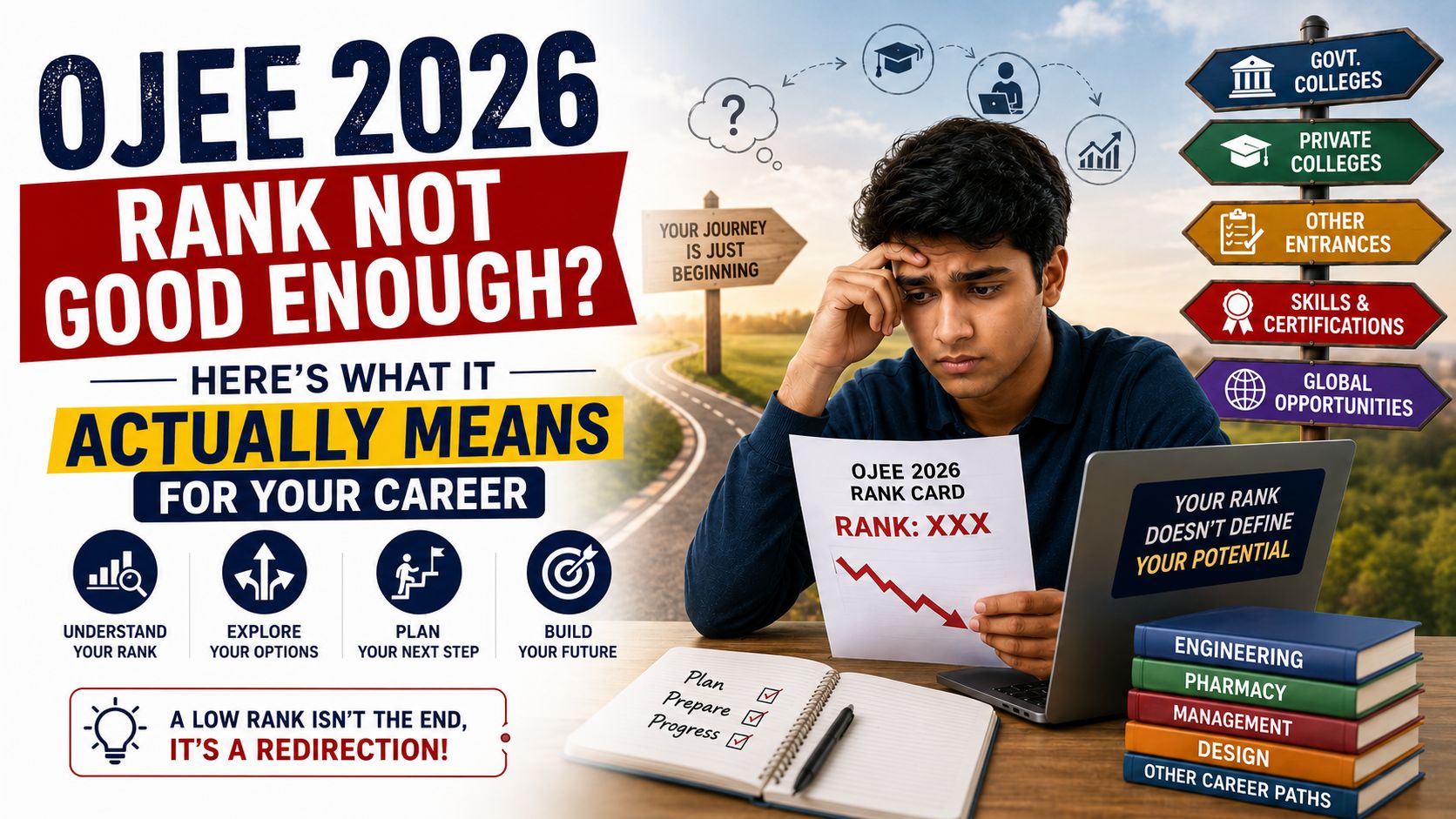
OJEE Rank Not Good Enough? Here's What It Actually Means for Your Career
A low OJEE rank doesn't mean your career is over. Learn what your rank really means, explore alternative colleges and career paths in Odisha, and discover how to make a smart decision that aligns with your strengths and long-term goals.