Back to Blog
General

Feeling stuck, overlooked, or unsure about your next career move? Discover 10 clear signs it's time for a career audit and learn how a structured review can help you regain direction, confidence, and momentum.
Dr. RK Singh
Founder, The CoacHR
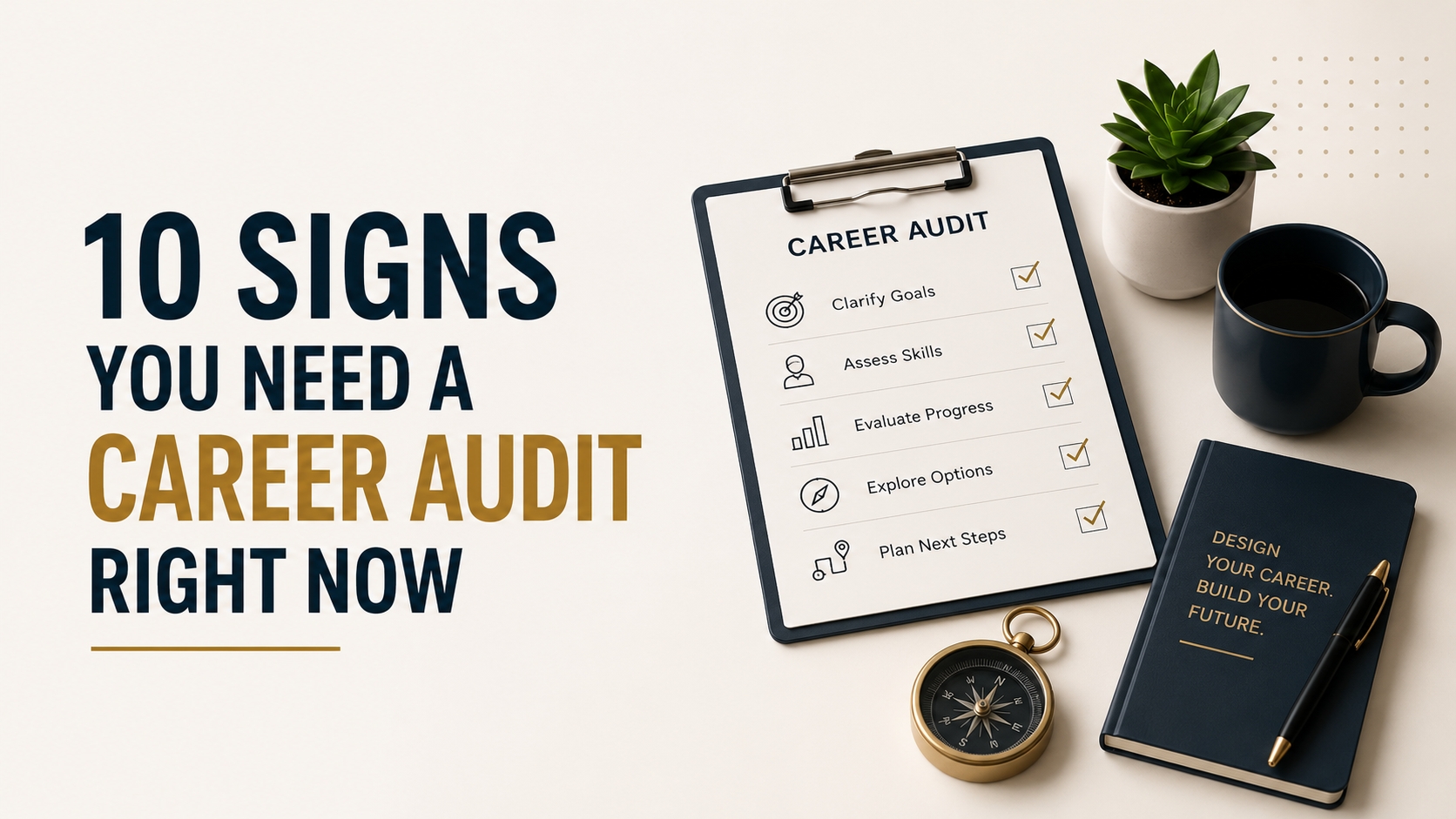
Most people don't wake up one day and decide, "Today I will overhaul my career strategy." Instead, career dissatisfaction builds slowly — a nagging feeling here, a missed promotion there — until one day it becomes impossible to ignore. The problem is, by the time it becomes obvious, you've often already lost months or years you could have used productively.
Here are 10 signs that it's time to stop waiting and get a career audit — before the discomfort turns into a crisis.
You're not failing at your job. You're not miserable, exactly. But something feels off, and you can't quite articulate what. This vague dissatisfaction is one of the clearest early signals that your role no longer aligns with your actual strengths or values — something a structured assessment can surface far faster than months of self-reflection.
One missed promotion could be timing. Two or three starts to suggest a pattern — either a skill gap you're not aware of, a perception issue, or a mismatch between your strengths and what the role actually requires. A skill gap analysis as part of a career audit can pinpoint exactly what's holding you back.
If you've noticed your role changing shape — tasks being automated, teams shrinking, job descriptions shifting — that's not paranoia, that's data. A career risk assessment quantifies how exposed your current role actually is, so you can act before disruption forces your hand.
Skill stagnation is one of the quietest career killers. It doesn't feel urgent day-to-day, but it compounds — and one day you look up to find your skill set has fallen behind the market without you noticing. An employability score test gives you an objective read on where you currently stand.
Everyone has an off week. But if the Sunday-night dread has become a consistent pattern for months, it's worth investigating whether it's the company, the role, or a deeper misalignment between your work and your natural strengths — something a personality and workstyle assessment can help clarify.
A layoff is disorienting, and the instinct to immediately start applying everywhere is understandable — but it's rarely effective. A career audit helps you move from panic to strategy, identifying which roles and industries actually fit your skills and risk tolerance before you spend months applying broadly.
"I think I want to switch industries" is a feeling, not a plan. Without data on your transferable skills, market demand, and realistic gaps to close, a career switch can turn into years of drifting. A structured career growth roadmap turns the vague intention into a concrete, sequenced plan.
If you find yourself constantly benchmarking your progress against former classmates or colleagues and coming up short, that's worth examining — not to obsess over comparison, but because it often signals an unspoken sense that your current trajectory isn't matching your potential.
Most professionals build their entire self-concept around assumptions — "I'm probably good at X" — without ever validating it against structured data. If you've never taken a proper psychometric or strengths assessment, you're essentially navigating your career based on guesswork, however confident that guesswork feels.
Staying in a job because you're afraid to leave. Avoiding a switch because you don't know what else you'd do. Taking the "safe" option every time by default. Fear-based decision-making is often a symptom of not having a clear picture of your actual options and market value — exactly what a career audit is designed to provide.
Quick Self-Check
Feel stuck without a clear reason
Passed over for promotion 2+ times
Industry visibly being disrupted by AI/automation
No new skill learned in over a year
Consistent Sunday-night dread
Recently laid off, unclear on next step
Considering a switch with no concrete plan
Frequently comparing yourself to "ahead" peers
Never taken an objective strengths assessment
Making decisions from fear, not strategy
If you checked off three or more, it's a strong signal that a structured career audit — not another late-night Google search — is your most efficient next step.
Why "Waiting It Out" Rarely Works
There's a common assumption that these feelings will resolve on their own — a new project will reignite motivation, a manager change will fix the dynamic, or things will simply "get better." Sometimes they do. But more often, these signs compound quietly over months or years, until the eventual trigger (a layoff, a health scare, a burnout episode) forces a much more urgent and stressful version of the same conversation you could have had calmly, on your own terms, today.
An Illustrative Example
Consider a professional who noticed three of these signs simultaneously — stagnant skills, repeated promotion misses, and rising anxiety about AI disruption in their sector — but kept deferring action because "things weren't bad enough yet." A career audit revealed an employability score meaningfully below their peer benchmark, alongside a clear, closeable skill gap. Within a defined roadmap, that gap became the specific, addressable target — rather than a vague anxiety with no clear next step.
What Happens After You Recognize the Signs
Recognizing these signs is the easy part. The harder part is turning that recognition into an actual plan — which is exactly where a structured career audit adds value beyond self-reflection. It replaces "something feels off" with a specific, data-backed understanding of what's off, why, and what to do about it.
The CoacHR Approach
Our career audit process is built specifically to catch these signals early — combining psychometric assessment, employability scoring, and career risk analysis into a single report, so you're never left guessing which of these ten signs applies, or what it actually means for your next move.
Frequently Asked Questions
Q: How many of these signs do I need before I should get a career audit?
Even one or two persistent signs are worth investigating. Three or more suggests it's time to act rather than wait.
Q: Can a career audit help even if I'm not planning to leave my job?
Yes — many professionals use audits to address skill gaps or risk exposure while staying in their current role.
Q: Is a career audit useful for freshers who haven't started working yet?
Yes, though the focus shifts from "signs of stagnation" to identifying strengths and fit before entering the workforce.
Q: How quickly can I get a career audit done?
Most audits, including assessments and a coaching debrief, are completed within a single 60-90 minute session.
Recognized three or more signs? Book a career audit with The CoacHR and replace the guesswork with a clear plan.
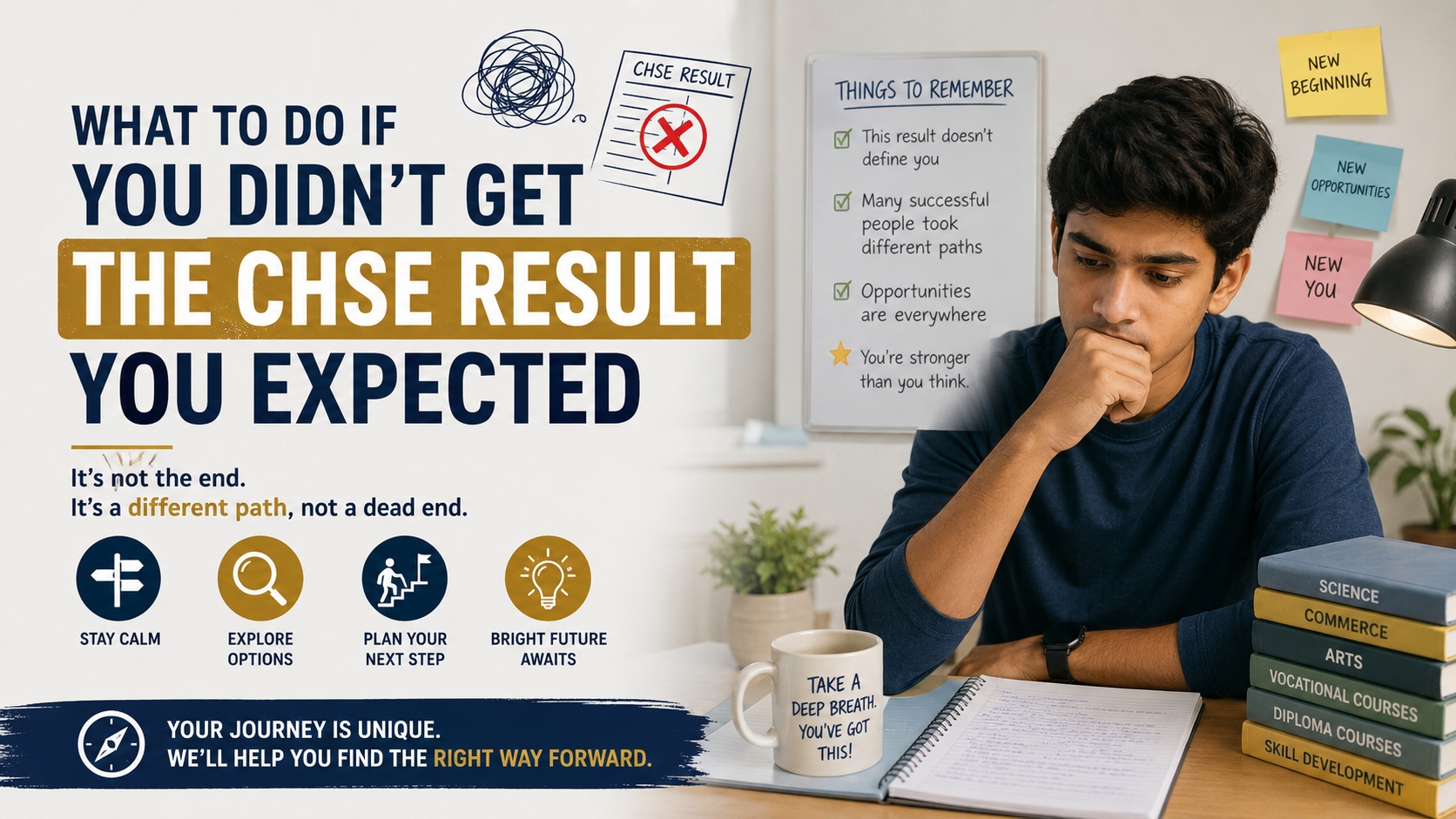
Not getting the CHSE result you hoped for can feel disappointing, but it doesn't define your future. Whether you're considering an improvement exam, choosing a different college, or exploring career alternatives, this guide explains the practical steps every Odisha student should know to make informed decisions after Class 12.

It's not AI that ends careers — it's staying static while everyone else adapts. Here's how to know exactly where you stand.

A low OJEE rank doesn't mean your career is over. Learn what your rank really means, explore alternative colleges and career paths in Odisha, and discover how to make a smart decision that aligns with your strengths and long-term goals.