Back to Blog
General 6 min read

Introduces the concept of a career audit as a data-driven diagnostic combining psychometrics, employability scoring, and skill-gap analysis — positioned as essential in an AI-disrupted job market.
Dr. RK Singh
Founder, The CoacHR
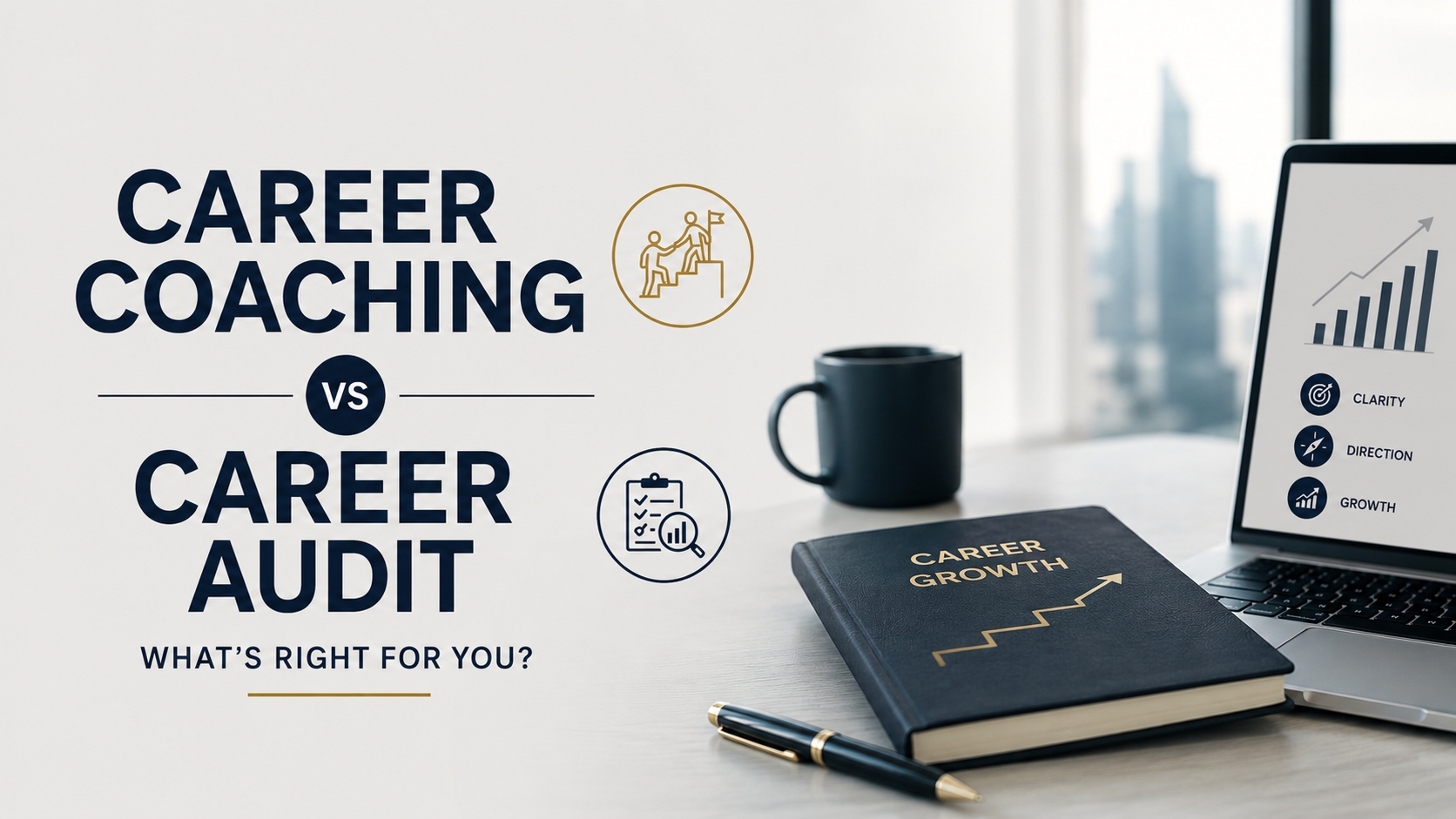
"Should I get a career audit or hire a career coach?" is one of the most common questions professionals ask when they first start looking for career support — and honestly, it's a fair question, because the two terms get used almost interchangeably online. They're not the same thing, and understanding the difference could save you both time and money.
A career audit is a diagnostic. Career coaching is ongoing guidance and support. One tells you where you stand; the other helps you get where you're going. In an ideal scenario, you'd start with the audit and follow it up with coaching — but let's break down why.
Think of a career audit as a comprehensive health check-up for your career. It's typically a one-time (or periodic) structured process that includes:
Psychometric and personality assessments
Employability and career-risk scoring
Skill-gap analysis against market demand
A detailed report with findings and a roadmap
It's data-heavy, structured, and time-bound — usually completed in a single session or over a few days. The output is a document: your career audit report, which becomes the foundation for whatever comes next.
Career coaching India professionals typically engage in is an ongoing relationship — weekly, biweekly, or monthly sessions — where a coach works with you over weeks or months to:
Help you execute the plan (whether from an audit or otherwise)
Talk through specific decisions as they come up (should I take this offer? how do I ask for a raise?)
Build skills like negotiation, interview performance, or leadership presence
Hold you accountable to the goals you've set
Coaching is less about diagnosis and more about execution and support. A good coach helps you navigate the emotional and strategic complexity of actually making career moves — not just identifying that you should.
Factor: Purpose
Career Audit: Diagnose current position, risk, and fit
Career Coaching: Guide execution and decision-making over time
Factor: Format
Career Audit: Structured assessment + report
Career Coaching: Ongoing conversations/sessions
Factor: Duration
Career Audit: One session (60-90 mins)
Career Coaching: Weeks to months
Factor: Output
Career Audit: A detailed report and roadmap
Career Coaching: Skill-building, accountability, real-time advice
Factor: Best for
Career Audit: Clarity, direction, benchmarking
Career Coaching: Support while acting on a plan
Factor: Data-driven?
Career Audit: Highly (psychometrics, scoring)
Career Coaching: Partially — more conversational
One of the most frequent mistakes professionals make is jumping straight into coaching without first getting clarity. Imagine hiring a coach and spending the first three sessions simply trying to figure out what's actually wrong — that's expensive clarity-seeking that a single career audit could have delivered upfront, at a fraction of the time and cost.
This is why, structurally, an audit-first approach tends to work better: you get the diagnosis quickly and objectively, then bring in coaching specifically for the parts that require ongoing human support — negotiation practice, interview prep, tough conversations with your manager, and so on.
You're not sure what's actually wrong — just that something feels off
You want a benchmark of your market value and employability
You need clarity before making a big decision (switching industries, negotiating a role change)
You want a structured, data-backed report rather than a series of conversations
When You Need Coaching (After or Instead of an Audit)
You already know your direction but need help executing it
You're preparing for a specific event — an interview, a negotiation, a leadership transition
You want ongoing accountability over weeks or months
You need help building specific skills (communication, leadership presence, decision-making under pressure)
An Illustrative Example
Consider a professional who had been offered a coaching package but wasn't sure what to even work on with the coach. After a career audit, it became clear the real issue wasn't a lack of skill — it was that their current role no longer matched their long-term strengths, based on their psychometric profile. Coaching sessions that followed were then far more targeted: focused specifically on transition strategy and interview positioning for a new function, rather than generic "career chats" with no clear agenda.
That's the difference an audit-first approach makes — coaching becomes sharper, faster, and far less like paying to talk in circles.
What About Executive-Level Professionals?
For senior and leadership-track professionals, the distinction still holds, but the stakes are higher. An executive career coach India engagement often starts with an audit-style diagnostic precisely because senior professionals rarely have the luxury of trial-and-error — a wrong pivot at a senior level is far costlier in time, compensation, and reputation than at earlier career stages. A structured career strategy session grounded in audit data tends to produce sharper, faster decisions than open-ended coaching conversations alone.
Do You Need Both?
In most cases, yes — but sequentially, not simultaneously. Start with the audit to get objective clarity on where you stand and what needs to change. Then use coaching to execute that plan, work through specific decisions, and build the skills you need along the way.
Skipping the audit and going straight to coaching isn't wrong, but it often means the first few sessions are spent doing informally what an audit does in a single structured process — at a much lower cost and much faster.
At The CoacHR, we deliberately built our model around this sequence: career audit first, to establish a data-backed foundation, followed by targeted career counselling for professionals who need ongoing support to execute their roadmap. It's a more efficient use of your time and money than starting with unstructured coaching conversations.
Q: Is a career audit cheaper than career coaching?
Generally yes, since it's a one-time structured process, whereas coaching is billed as an ongoing engagement across multiple sessions.
Q: Can I do coaching without an audit first?
You can, but many coaches will spend early sessions trying to establish the same clarity an audit provides upfront — often at a higher overall cost.
Q: Which one is better for someone who just got laid off?
A career audit is usually the better starting point, since it quickly clarifies direction before you commit time to a coaching engagement.
Q: Does The CoacHR offer both audit and coaching?
Yes — our model is designed to start with a career audit and move into targeted coaching based on what the audit reveals.
Not sure which one you need? Start with a career audit at The CoacHR — it's the clearest, fastest way to find out.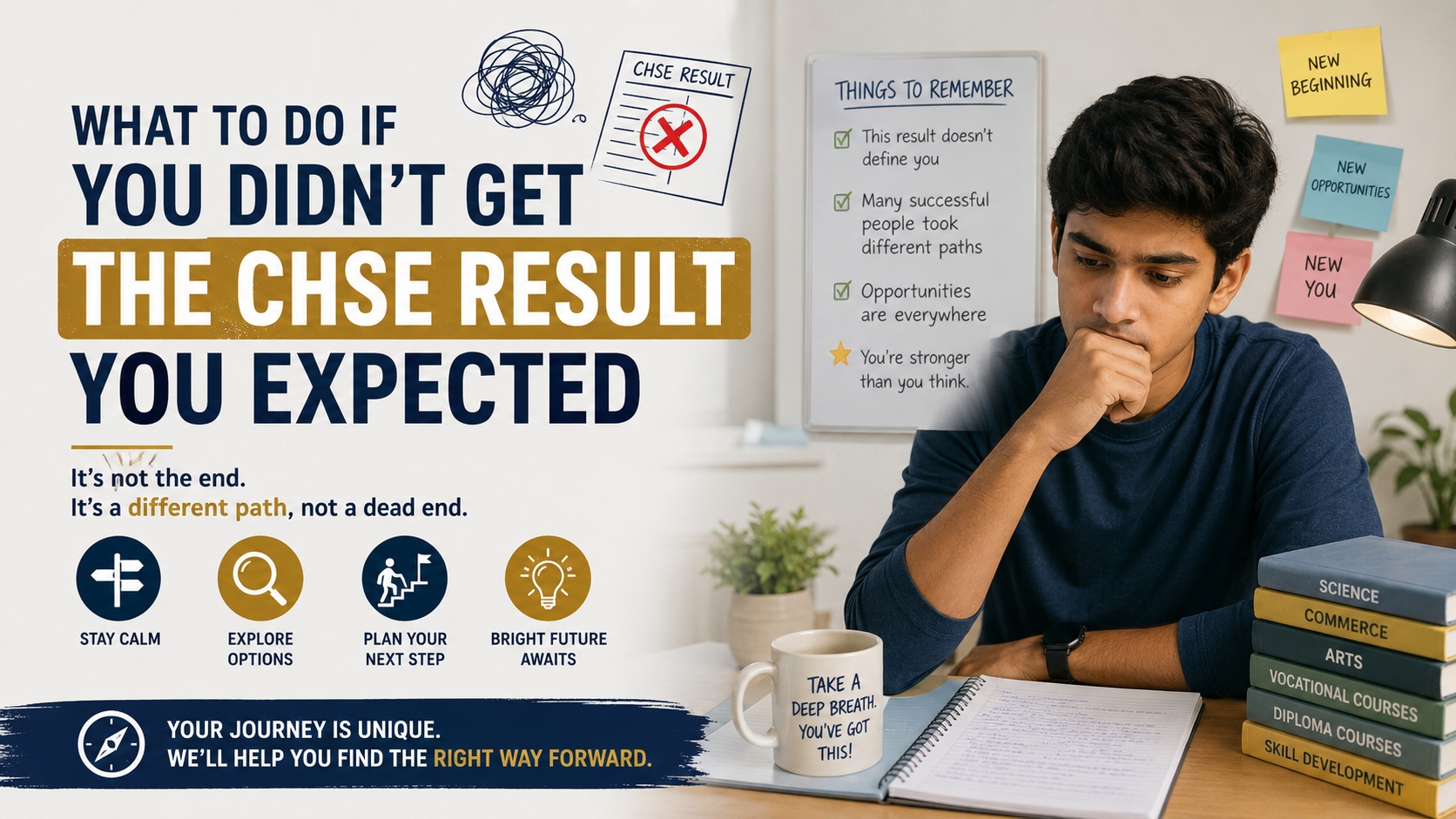
Not getting the CHSE result you hoped for can feel disappointing, but it doesn't define your future. Whether you're considering an improvement exam, choosing a different college, or exploring career alternatives, this guide explains the practical steps every Odisha student should know to make informed decisions after Class 12.

It's not AI that ends careers — it's staying static while everyone else adapts. Here's how to know exactly where you stand.
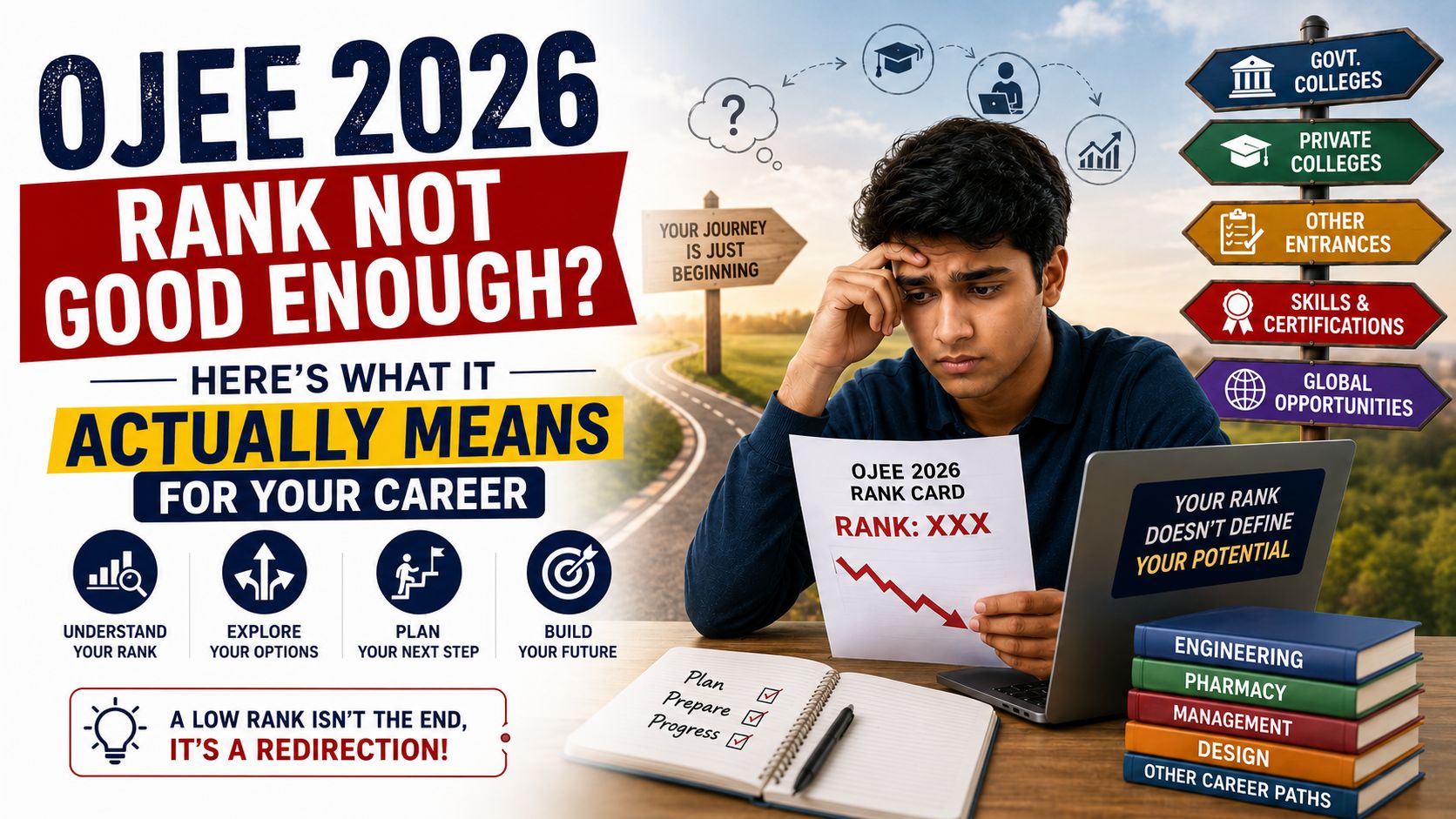
A low OJEE rank doesn't mean your career is over. Learn what your rank really means, explore alternative colleges and career paths in Odisha, and discover how to make a smart decision that aligns with your strengths and long-term goals.